

Study of NanoVi® Device – Impact on Lactate Levels
University of Vienna, Center for Sports Science
Research conducted at the Center for Sports Science at the University of Vienna evaluated blood lactate and inflammatory markers after exercise-induced oxidative stress. The results outlined below are part of a larger study of the impact of NanoVi technology on the physiology of athletes. The impact of NanoVi sessions on white blood cell counts is summarized elsewhere.
Objective: The objective of this empirical study was to describe the effect of NanoVi bio-identical signaling on the blood lactate levels as an indicator of an athlete’s response to physical stress.
Overview of methods (details below)
- Double-blind crossover study design
- Active NanoVi and inactive placebo devices were indistinguishable to researchers and athletes
- 21 healthy male athletes were evaluated
- Diet, supplementation, and exercise were controlled prior to testing
- A 15-minute NanoVi Pro™ session preceded all-out exertion testing
- Capillary blood was tested 30 minutes before the exertion test (t-30), after the NanoVi session but before exertion (t0), and five times after exertion testing (t55, t58, t60, t62, and t65).
Results
Lactate concentrations in the blood were markedly lower after the all-out exertion test when athletes used the active NanoVi Pro device prior to exertion. The active NanoVi group measured 17% less lactate than the placebo group immediately following exertion (t55) and at the final test time (t65), with some variation in the intermediate time points. Statistical analysis, done with a T-test for independent samples, showed a significant difference between the active and inactive groups for all measurements taken after exertion (Figure 1). As expected, there were no significant differences prior to use of the NanoVi device or just before the exertion test (t-30 or t0). The exertion test pushed lactate levels up dramatically. Lactate was six times higher in the placebo group but only five times higher in the active NanoVi group. Researchers controlled for other factors and attributed the improvement in lactate levels to the 15-minute NanoVi Pro session that preceded the exertion test. 15 minutes is half the standard session time.
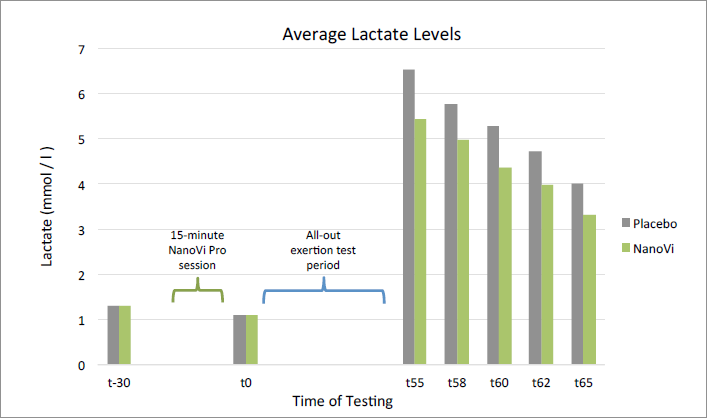
Figure 1: Lactate in A Placebo Controlled Study of NanoVi.
Study subjects (N=21) underwent a 15-minute exposure with the NanoVi, blinded to the
functional status of the device. t55 p<0.01; t58 p<0.05; t60 p<0.01; t62 p<0.01; t65 p<0.05
Conclusions
This study verifies the regenerative capacity of the NanoVi™ device. It confirms that NanoVi sessions prevent the production of excess lactate during exertion. Lactate levels were substantially lower with only a 15-minute session (half the normal session) done prior to physical exertion. A substantial impact on lactate levels, from an intervention that precedes exertion, is remarkable. The magnitude of the improvement (17% less lactate) is extraordinary. These results suggest the potential for athletes to reduce damage and improve performance with a NanoVi session prior to competition or training.
Full Description of Study Methods
Subject Selection
For inclusion in the study athletes met the following criteria:
- Male, between the ages of 18 and 35
- Amateur athletes with experience in running (regularly running more than 1.5 hours / week for more than a year)
- BMI ≥ 20 and <25 measured as kg/m2
- Non-smoking
- Good physical condition and overall health
- No use of supplements within two weeks of testing
Evaluation and Testing
Athletes were evaluated on three different days. A 7 to 14-day washout period preceded each evaluation day. During the washout period, the athletes diet and exercise were controlled.
On the initial day of evaluation, the athlete’s health was assessed and a baseline for their exertion was established. Weight and height and were recorded. Body composition including body fat, body cell mass, and fat-free mass were measured using the bioelectrical impedance analysis. Spiroergometry testing was used to determine the athlete’s VO2max, which is a measure of the maximum volume of oxygen that the athlete can use. VO2max measurements were used to derive the appropriate treadmill speed for the all-out test. The treadmill speed was calculated to have athletes exerting at 75% of their VO2max. This made it possible to develop an individual protocol for each athlete.
Prior to each of the two testing days, all participants fasted overnight and were given a defined, high carbohydrate breakfast. Capillary blood was sampled 30 minutes before the all-out exertion test, time point t-30. Participants were randomly assigned to a device. Neither the athletes nor the investigators knew which of the two devices was the active NanoVi device. Athletes then had a 15-minute session on the NanoVi Pro device, followed by a second blood test, taken at time point t0.
During the all-out exertion tests, athletes did a five-minute warmup at 8 km/hour then ran 45 minutes at the speed derived from Spiroergometry testing. This was followed by a treadmill speed increase of 5% of the previous speed every two minutes until exhaustion. The exertion test was either terminated voluntarily by the athlete or by the attending physician. During testing, heart rate was monitored and respiratory gases were measured every 15 minutes to ensure the training intensity was safe for the athlete.
The second day of testing was done between seven and 14 days after the first test (the washout period). Runs were performed exactly the same way, but active and inactive devices were switched so each subject received the opposite of what they had on the first testing day.
Analysis
To assess lactate concentrations, capillary blood was collected from the subject’s earlobe at seven time points: immediately before (t (-30)) and after (t0) a 15-minute NanoVi session, then after the all out exertion test at (t55), (t58), (t60), (t62) and (t65). Samples were evaluated with a Biosen S-Line analyser by staff at the Austrian Institute of Sports Medicine.
Statistical analysis was performed using SPSS 22.0 and Excel. Initial results were checked for normal distribution by the Kolmogorov-Smirnov test. Statistical significance was tested using the T-test for independent samples informed by the spreadsheet for fully controlled crossover studies developed by Hopkins (2005)*. Results were considered significant if p was ≤ 0.05.
*Hopkins, WG (2005). A spreadsheet for fully controlled crossovers. Sportscience, 9.

