

How NanoVi® Supports HRV Improvement and Autonomic Balance
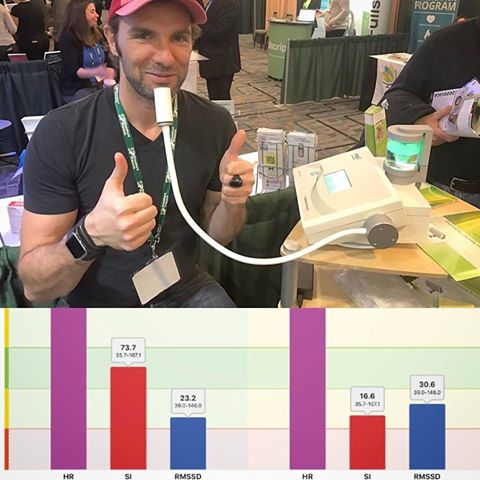
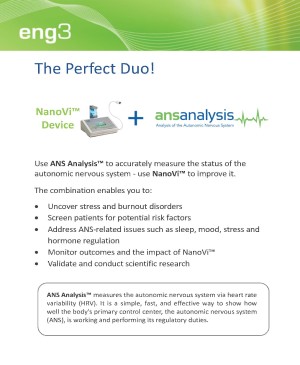
Staff from ANS Analysis, a leading HRV technology company, joined the Eng3 team at the Integrative Healthcare Symposium. An ANS Analysis representative measured Heart Rate Variability before, then during a NanoVi session.
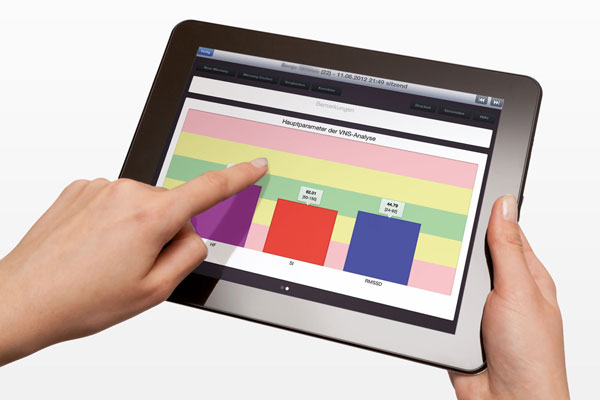
The IHS attendees were tested while wearing a chest strap monitor to accurately measure HRV. Heart Rate Variability works by measuring the micro-fluctuations in the rhythm of the heart beat.Heart Rate Variability is an excellent indicator of the balance of the autonomic nervous system (ANS).
The parasympathetic aspect of the ANS is responsible for “rest and digest” and is key to good sleep, positive mood, and strong immunity. Parasympathetic activity is the de-stress side of things while sympathetic nervous system activity gives us “fight or flight” capability. Stresses of modern society tend to over-activate sympathetic activity. This releases stress hormones into the system and (unless you need to fight or flee) can lead to burnout, fatigue, and mood disorders.
Ultimately, achieving autonomic balance for almost all of us means increasing parasympathetic activation and decreasing the sympathetic response of the autonomic nervous system. Because it reveals the status of the ANS, Heart Rate Variability testing is a valuable tool for all aspects of health and performance.
For many years, HRV testing has been used to show the benefits of the NanoVi. Integrative Healthcare Symposium attendees were eager to be tested and multiple tests were done. For a detailed breakdown of HRV results from elite athlete testing, see Antonio Robustelli’s HRV analysis using NanoVi. The results were overwhelmingly positive. The two test results below illustrate how the NanoVi device can be used to improve balance in the autonomic nervous system. NanoVi is designed to support the cellular processes involved in autonomic nervous system balance. Many users are interested in HRV as one way to observe how their body responds.
The graphs below, which are of females aged 47 and 45, show a positive reaction to the NanoVi session within only 10 to 15 minutes. For each case, HRV results before NanoVi use are shown on the left and results after the session has started are on the right. Outcomes were similar so both graphs show:
- Sympathetic activity decreased (fight-or-flight response): The Stress Index (SI), shown in red, dropped significantly within 10–15 minutes, indicating a measurable reduction in sympathetic overdrive.
- Parasympathetic activation increased (rest-and-digest response): RMSSD (Root Mean Square of Successive Differences), shown in blue, rose, reflecting improved autonomic balance and recovery capacity.
- Heart rate remained stable, shown in purple, confirming the shift was driven by autonomic regulation, not cardiovascular stress.


Figure 2: ANS Analysis results from a 45-year-old female participant. RMSSD (a key marker of parasympathetic activation) increased from 45.6 to 59.0 ms, and the Stress Index decreased from 46.5 to 13.6, demonstrating meaningful improvement in autonomic balance within a single NanoVi session.
How to Improve HRV: 3 Key Mechanisms
Understanding how to improve HRV starts with understanding the autonomic nervous system. HRV improves when the parasympathetic nervous system becomes more active relative to the sympathetic system. The following three mechanisms are central to that shift.
- Increase Parasympathetic Activation: The parasympathetic branch of the ANS governs “rest and digest” processes — including heart rate regulation, digestion, and immune function. Increasing parasympathetic activation is the most direct way to improve HRV scores. This is measured by RMSSD in HRV analysis.
- Reduce Sympathetic Overdrive: Chronic stress, poor sleep, and overtraining all elevate sympathetic activity (the “fight or flight” response), which suppresses HRV. Reducing the Stress Index (SI) is a reliable indicator that sympathetic overdrive is decreasing.
- Support Cellular Recovery Processes: Autonomic balance depends on healthy cellular function. The NanoVi device is used to support the cellular processes involved in autonomic nervous system balance, which is why HRV testing has been used for many years to observe how the body responds to NanoVi sessions.
Find Out Whether NanoVi Is Right for You
NanoVi is used by athletes, wellness professionals, and health-conscious individuals looking to support recovery, performance, and healthy aging at the cellular level.
Complete the form below to receive:
• Detailed information about NanoVi technology
• Research and clinical findings
• NanoVi model comparisons
• Pricing and ownership options
• Guidance on choosing the right NanoVi device for your goals
You’ll receive immediate access to NanoVi information, pricing, and next-step guidance to help you determine whether NanoVi is the right fit for you.
Heart Rate Variability (HRV) Measurement combined with NanoVi at IHS
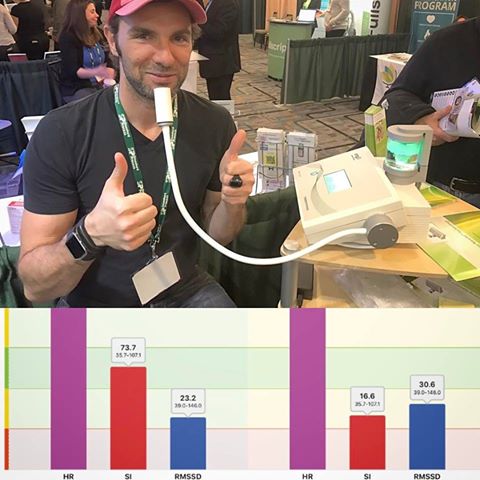
Biohacker; Bob Troia with his HRV Results